Friday, September 10, 2010

CWG: ACID TEST FOR INDIA’S GLOBAL IMAGE


In the last two decades, the perception of India has changed drastically across the world. From being perceived as a poor socialist country, India is now regarded as an economic superpower of this century. India’s position on global issues carries a lot of weight with the western powers wooing India to become its ally.

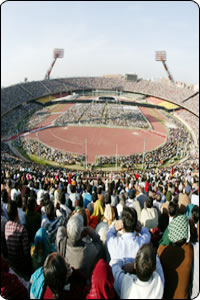
Major sporting events, on the other hand, are considered as a platform to showcase the strength and progress of a nation. No wonder then that even in the two decades, all the major sporting events like the Olympic Games, FIFA world Cup, Asian Games and the Commonwealth Games have been hosted primarily by developed nations.

All these events are organized by a major city or a metro of a particular country. The superficial perception is based on the infrastructure of the host city which is on display during the course of the event and other key human index parameters are ignored.

For example, the recently held FIFA Football World Cup hosted by South Africa was considered a huge success. Even though South Africa is 129 on the human index list, just five positions ahead of India which is 134. But all the statistics became oblivion when the world cup got over.

But the upcoming Commonwealth Games will be the first major global event organized by India post-liberalization. The last time India organized a major event was the Asian Games in 1982. The Cricket World Cup in 1987 and 1996 were also major sporting events but cannot be considered on the same scale as Asiad as the viewership and the number of nations that participated were too small compared to the Asian games.

In 1982, when New Delhi hosted the Asian Games, India’s economy was nearly $194 billion and was considered an under-developed nation. But still it managed to organize a successful event which bolstered New Delhi’s image. China, which is 92 on the human index list and falls under the ‘medium developed country’ category, showcased itself as a nation with world class urban infrastructure during the 2008 Beijing Olympics. The only advantage China had was that there was no free media coverage allowed before the inauguration of the games. So basically no one outside China has a clue about China’s preparations.

The progress of CWG preparations in New Delhi, on the other hand, has not only been reported by the Indian media but also the international media. These games have so far been considered as a golden opportunity for India to reinforce the perception that India will be one of the biggest super powers of this century.

But India’s failure to host these games successfully will not only raise questions on India’s progress on the development front but will also be linked to other human index indicators. Because, remember the world has just been hearing about India’s emergence on the world stage on the basis of media reports and economic indicators. But they haven’t got a chance till now to take have a close look at infrastructure development made by India. The stereotypical perception of India has always been poverty, slums, BPOs, rural India etc., as showcased by a plethora of international documentaries and movies. Even the 2009 Oscar winning movie - Slumdog Millionaire - showed the stereotypical elements of India like poverty, slums, riots and the BPOs.

That perception can be changed by hosting a world class event. Ironically, the success or failures of these games will not have any impact on the real problems of India. It won’t change the lives of the poor farmers’ committing suicide or uplift the 30 odd percent people living below the poverty line. But it will surely boost the Indian pride no matter how superficial it maybe.

Wednesday, August 18, 2010

INDIA’S GREAT KASHMIR BLUNDER


The summer of 2010 will not forgotten in Kashmir for decades to come. Even as the tension on the streets of Kashmir was not enough which has already witnessed killings of more than forty people that the state was hit by another tragedy- the flash floods which has consumed 100 lives and nearly 200 people are still missing as I write this article.

Militant insurgency in Kashmir started to surge way back in 1989 but never in the last twenty years had the anger on in the valley (Kashmir) reached a level where women & small children had taken to the streets to display their anger, frustration & agony by pelting stones at the paramilitary forces. And what has come as an even bigger surprise is that only nineteen months back during the state assembly election the voters’ turnout touched sixty percent which was seen by many as the end of Kashmiri nationalism and the beginning of new era in Kashmiri politics. So what went wrong in the last nineteen months that has lead to this catastrophe?

For the past 62 years we have always blamed elements from the across the border & the separatists for all the violence that has occurred in the state. But if you talk to any Kashmiri at this time, he/she will tell you just one thing at this point of time- the Indian state & the army are the biggest threats for Kashmiri. Talk to the youth in Kashmir, he will tell you that it’s the armyman’s gaze right from his childhood that has troubled him and still continues to. The military force claim that all the firing has been done in self defense against the heavy stone pelting that has been directed towards them but the reality remains that more than half the youth dead in the firing have been shot above their waist or on their head. Many bystanders including women taking shelter in their homes have been shot dead.So it is quite natural that the Kashmiris which include mothers, sisters & small brothers are venting their anger against the police for the killings of their brothers & fathers

The significant victory which the Indian state witnessed after the 2008 state elections has perished. Omar Abdullah who became the youngest chief minister of the state and was riding a popularity wave has been brought down to the ground. His unpopularity has reached such a high that even his party cadres are drifting away from the party. Abdullah’s critics say that he has lost connect with the people & failed to uphold the trust of the Kashmiris. This is the same Abdullah who during his most famous speech in the parliament in July 2008 during the nuclear deal debate had said that he would do anything to protect his land & aspirations of his people. Today his people are frustrated, angry & feel betrayed.
But the bigger disappointment has been the reaction from New Delhi which completely failed to read the mood on the ground. Even the silence of the Prime Minister on this issue has compounded the problem and has alienated the normal Kashmiri.

When sixty percent of the state’s population came out and voted in the state elections they placed their trust not only in the state government but also New Delhi. This was an opportunity to make them feel that they are as much of an Indian as any other Bihari, Tamilian or Marathi. Demilitarization of the state could have been one of the first key steps taken to bolster that trust but alas, the opportunity has been blown away.

It is true that elements in Pakistan & the separatists which had started losing influence over the people have exploited this opportunity. But the bigger true is that the people out on the streets are the same people who casted their ballots nineteen months back.So So the blame entirely lies with New Delhi & the Omar Abdullah lead government for creating a trust deficit which has lead to this situation. New Delhi might be able to bring down the violence in the days to come with extra security but has lost the chance of winning the Kashmiri hearts for decades to come. And the calls for ‘azaadi’ (independence) are only going to get louder on the Kashmiri streets.

Saturday, July 31, 2010

IS CBI THE MOST POTENT TOOL FOR POLITICAL PARTIES?

The arrest of Gujarat home minister Amit Shah amongst all the drama in Ahmedabad which was been played out of New Delhi leaves everyone with a curious question- Is CBI the ultimate weapon to settle political rivalry or score political points?

Yes, Amit Shah’s name has been doing the rounds in the Soharabuddin controversy for sometime now and it was not the Congress but the Supreme Court that directed the CBI to reopen the case. It’s tough to say at this stage whether Shah is actually guilty or has been framed by the Congress as alleged by the BJP. The final authority on this would be the court which means, we will have to wait a little longer for the real story to emerge.

Hypothetically, if the court does find Shah guilty on all the charges that have been levied against him then it will no doubt give the victim’s family a sense of closure and will also underline the fact that justice might be delayed but is not always denied if investigated in an honest & unbiased fashion even if it involves politicians & businessmen. CBI will have to be appreciated for its thorough investigation. But the paradox of this kind of an outcome is that it will reinforce the notion- that CBI is a political weapon used to settle political scores.

If we take up a few cases involving high profile politicians that have been investigated by the CBI then it paints a sorry picture of the investigating agency. The Jagdish Tytler case in which the CBI gave him a clean chit last year saw a huge outcry from the Sikh community which compelled the Congress party to not issue the party ticket to him just before the Lok Sabha election last year. The case was reopened and last week the CBI has yet again given a clean chit to Tytler. The CBI said in the court that it did not have any evidence to prosecute Tytler. The CBI has made some progress against another Congress leader- Sajjan Kumar, who is also accused in the 84 riots.

Outside the Congress fold there are at least three big cases that are been investigated by the CBI. The Mulayam Singh disproportionate assets case has been under investigation for sometime now but there hasn’t been any progress. There have been allegations made by senior legal counsels against the government for directing them to go slow on the case. Similarly the Mayawati illegal wealth case has seen been on the slow track. So why can’t the CBI expedite the process in these cases? The main factor behind that is the direction from the government to the CBI to go slow on these cases. Even though both Mulayam & Mayawti are just lending outside support to the government and have in fact joined hands with the BJP on issues like the price rise but when it comes to critical issues like the ‘nuclear deal vote’ in 2008 & the ‘cut motion’ the Congress has used these court cases to bargain for their tacit support. Mulayam & Mayawati did not vote against the government when it came to these key issues. Now is that just a mere co-incidence or points to a larger game? The acquittal of Ottavio Quattrocchi in Bofors scandal has further raised questions on the credibility of the CBI to investigate cases without any bias.

But it’s not only the Congress that has used the CBI, even the BJP during the NDA tenure ensured that it used the investigating agency for its benefit. The NDA governments virtually put on hold investigation against BJP patriarch LK Advani in the Babri demolition case. Even the Congress is not too keen to resurrect the Babri demolition issue. This became increasingly clear after the Liberhan commission report was hushed up last year. The Congress fears that by prosecuting BJP leaders in the Babri demolition case it might give the BJP a new lease of life and it may actually work to BJP's advantage. The Congress does not want to take that risk, especially now when the BJP is on the backfoot.

These high profile political cases clearly highlight that political parties have been using the CBI to their benefit. But the CBI has been the biggest victim as this appraoch has undermined its credibility even though it is on par with world class investigating agencies like the CIA & FBI.

Since the Congress led UPA is in power, the Congress should initiate the process of making CBI an autonomous body on the lines of the Election commission and the Lok Ayukta. This will not only help the CBI break shackles when it comes to unbiased investigation but also give Congress the high moral ground. But this is something which the political fraternity will oppose as that would change the dynamics of the political games that are played out over and over again.

Wednesday, July 21, 2010

HAS INDIA GIVEN AWAY THE ADVANTAGE?

Except for the initials of their first two names ‘SM’, there is nothing common between foreign ministers of India & Pakistan. SM Krishna is a soft spoken man who does not belief in tough & straight on the face talk but more in mild diplomatic tone of communication. His counterpart SM Qureshi on the other hand is far more aggressive and articulate in his communication. No wonder then that even before Krishna’s plane landed in New Delhi back from Islamabad, his counterpart in Pakistan Qureshi had quashed the Indo-Pak talks.

The problem with Indo-Pak talks has always been the hype surrounding these discussions. The media from both sides expect some sensational announcement that would change the future course of these two nations. So even if both sides make some small progress after series of talks, it takes just one issue to trample them..

Post 26/11, the scenario was gloom for a year before the Indian PM; Dr Manmohan Singh took the initiative to talk to Pakistan. The Sharm El Shaik fiasco did put Dr Singh under a lot of pressure but it was his personal agenda to make sure that the talks between the two sides do not derail.

But the biggest hurdle for Indo-Pak talks to make progress is India’s demand for action against the perpetrators of 26/11. Even if the Pakistan government is willing to take action against these suspects, it simply cannot. The plethora of dossiers submitted by India clearly points the finger at Hafiz Saeed. The Pakistan government did take some action by filing a case.But the courts could not convict him citing lack of evidence. But the Headley revelation has brought a new twist in the tale. The role of ISI (Which was in doubt all this while) in the attack has not only put Pakistan on the back foot but also jeopardized the peace talks.

The reason why Saeed is still a free man today is because the 26/11 attack was done with the full backing of the ISI. So even if the government tries to take action against Saeed, ISI won’t let that happen. The Pakistan army cannot afford to let ISI be pulled in this case as that would globally tarnish Pakistan’s image.

That is the key reason for the failure of the foreign ministers’ meeting. Given the recent turmoil in Kashmir, Pakistan got the license again to raise the Kashmir issue to distract the focus of the talks. So what does India do from here onwards?

There are three options India has from here.

First- Stop talks with Pakistan till it delivers on the 26/11 case. But then that leads to a deadlock again and wipes out all the progress made in the last few months.

Second- Push the US to pressurize Pakistan to take some action. But that’s again not going to fetch any positive result as US’s priority is Afghanistan for which it needs Pakistan. No wonder then that a fresh package of $500 million has been unveiled by Hillary Clinton for Pakistan. And the US has refused to publicly comment on ISI’s role in the 26/11 case.The reason- US is not in favour of declaring Pakistan a terrorist sponsored state.

Lastly- Opens talks on all issues including Kashmir with the hope that Pakistan would respond by taking some action in the 26/11 case.

The last option seems the only way ahead for India at the moment. But then by doing so India will again lose the diplomatic edge by taking more steps whereas Pakistan without taking any action against the 26/11 conspirators would be in a dominant position to drive the talks forward. It is clear from the statements made by the foreign minister that Pakistan is not desperate for talks with India.

Going to the United Nations with all the evidence collected against Pakistan will not be of much help as United States cannot allow any sanctions against Pakistan as that would deter its Afghanistan plans.

The only way ahead for India is to keep talking to Pakistan even if that means slow progress on the 26/11 front. Freezing the dialogue process will become a big problem at this stage. India should not hesitate to discuss all core issues as India would be in a much better position to handle the Kashmir issue rather then Pakistan which would find it difficult to not respond to the 26/11 case. The bottom line is that ups and downs have been part & parcel of Indo-Pak talks and the talks should continue.

Thursday, June 17, 2010

DISCIPLINE OR CRUELTY?


The suicide committed by 14-year old -Rouvanjit in Kolkata after been beaten in his school is a chilling reminder of the methods followed by schools in our country.

It is true that we have one of the best education systems at the primary level which has been instrumental in churning out sharp minds from India. But unfortunately our schools have been good only at the academic part of education. Schools biggest contribution to a human's life is that it builds the primary character of a child on which his/her whole life revolves. A child's basic characteristics are directly proportional to the kind of environment he/she is brought up in. And schools play a big role here especially in today's time. Once the child is out of his/her home it is school that gives protection from all the worldly troubles.

In India even good English convent schools with years of history and legacy behind them follow the harsh and ruthless way of educating children. Disciplining the child is important but the approach adopted by the school is very critical. Beating and caning students for irrespective of any reason is the cruelest way of them all. Instead of making children realize as to where they are going wrong, schools instill fear in them by hitting them with a cane, duster or ruler.

There are so many children who cringe within themselves everyday because of the humiliation they go through by the hands of their teachers and school authorities. But many are not able to garner the courage to talk about it to their parents. And some like Rouvanjit choose the extreme way of ending their life.

Kapil Sibal, the HRD minister who has been lauded for bringing in the much needed 'Right to Education bill' should look at this issue with all seriousness. Students committing suicide because of the humiliation they go through at schools is a serious issue which needs to be addressed.

One step that can be taken is to make it mandatory for schools to hire professional counselors to handle these kinds of situations. The education authorities should keep a close eye by continuously taking feedback from students about the treatment been meted out to them by teachers and school authorities.

India's biggest asset is its young demography, especially the school children. It's no secret that Indian children are the sharpest and have proven themselves across varied disciplines. But if we ourselves cut the roots before the tree grows then it would be the most shameful blunder by us as a country and society…

WEST BENGAL: DESPERATE FOR CHANGE


Mamata Banerjee triumph in the Bengal civic election, particularly in Kolkata has not come as a major surprise but definitely as a huge jolt for the 'Left'. The writing is on wall for Buddhadeb as many have already pronounced that Mamata is all set to become the first woman chief minister of Bengal next year.

Whenever I discuss the ongoing change in Bengal's polity with my Bengali friends they have just one point to say- 'The urbanites don't like Mamata, but they are fed up with the Left'. This reason underlines the factor that has influenced the 'winds of change' in Bengal.

After ruling West Bengal for 'thirty six' long years with an iron fist, the Left had left a political vacuum in the state. There was no real challenger in the state to stand up against the might of the west. The man who led the Marxist revolution in Bengal was Jyoti Basu, who remained chief minister for a record 23 years and won five terms. When Basu relinquished the chief minister's post in November 2000 and made way for a younger, efficient & moderate Buddhadeb Bhattacharya, many thought this would mark the beginning of Left's decline in the state. After all when Basu did step down it was not the best of times for the Left. Urban jobless rate was rising, Basu's family name had got involved in corruption cases and even in rural Bengal Left was seen losing ground. But thanks to Buddhadeb's clean image and efficient style of functioning, he was able to restore confidence in the people. The Left retained power after winning the 2001 assembly elections.

The real change began between 2001 & 2006. Buddhadeb embarked on a path which no 'comrade' had dared to even speak off openly. He initiated the economic liberalization policy in Bengal by inviting industrial houses to Bengal. The biggest catch of them all was Ratan Tata, who agreed to set up 'Nano's production plant in Singur. Many within the Left criticized Bhuddhadeb for initiating economic reforms in the state by inviting foreign investment at the cost of agriculture land. Buddhadeb's argument was that these lands were not futile anymore and industrialization will help improve lives of these farmers who owned these lands.

In the 2006 assembly elections Buddhadeb stunned his critics by sweeping the elections. His popularity was at an all time high. The masses from both urban & rural centres were all gaga over him. With this win Buddhadeb was able to create his own niche within the Left which was all this while overshadowed by Basu's legacy. This victory was termed as the turning point for the Bengal state and Buddhadeb saw this victory as a vindication of his policies. He was now the poster boy of the 'Left' and was proclaimed by many in the media as the best chief minister in India!

Politics as they say is all about that one moment that can change the momentum. Singur & Nandigram was the moment that spelled doom for Buddhadeb and gave a new ease of life to Mamata Banerjee who was in oblivion. The forceful approach by the government and more importantly by the Left cadres on the ground appalled the people. Suddenly all the good work done in the last one decade by Buddhadeb was forgotten. The arrogance displayed by the Left cadres was frightening.

The people of Bengal had also become bored & tired of the Left. They were probably waiting for an opportunity to get convinced to vote the Left out. After all it was a miracle of sorts in Indian polity that for three and half decades anti-incumbency hadn't spoilt Left's game. The masses couldn't find an alternative outfit to replace the Left. The Congress could never raise the right issues and strike a chord with the citizens of Bengal. But after Singur & Nandigram the people knew the time had come for a change. Unfortunately they don't have any other alternative but to vote for Mamata. Change has become imperative and even if it was not Mamata but some other formidable party they would have voted for it. So what if they don't like her but at least they are not completely unfamiliar with her. It's a risk which the Bengalis are willing to take.

Will this mood last till 2011? That is the big question. But one thing is certain that Mamata has captured the momentum and she will do everything possible to drive home this time around. She doesn't need to do anything extraordinary at the moment because by default the finger on the voting machine will punch for her. As for Buddhadeb, his only hope is to reconnect with the masses and try to convince them to give him a graceful exit which he deserves for his commendable work and not make him pay the price for his party's sins.

Monday, June 7, 2010

AIR INDIA: NO WINGS TO FLY


Just when it seemed that things were starting to look up for national carrier Air India, the Mangalore tragedy occurred. Just when the rescue operations got over and the families were still mourning, the engineering & ground staff of Air India went on a flash strike.

Air India was the sole fight operator in India for nearly five decades. It was started by JRD Tata way back in 1932 before the government bought a stake in the 1940s. All the five decades Air India flew both on international & domestic routes. It one of the few airline operators in Asia, that too at a at time when not many countries had their own national carriers. But like any other public sector organization Air India was dominated by the government style of working attitude since they had an absolute monopoly. In 1992 India’s first private sector airline Jet

airways made its entry. In the late 90s and early part of this decade many other private companies entered this sector. It is from this point that things started going haywire for Air India. From being the market leader with over 50% market share (because of its monopoly) till the beginning of this decade it has been relegated to the third position with an abysmal 18% stake. The NDA government had plans of privatizing the airline in 2001 but due to the global aviation turmoil the bidders withdrew from the bid. The merger of Air India (few on international routes) with Indian airlines (flew on domestic routes) spelled more disaster for the national carrier.

Today Air India has a total debt of nearly $10 billion. It has incurred a loss of $1.5 billion for the last few years. To add to its woes are sixteen employee unions which are waiting to go against the management at any given excuse. The total work force of Air India is 30,000, which is three times more than the required number.

Cynics will tell you that Air India is doomed. Primarily for its own mistakes and partly because of unnatural incidents, for instance the Mangalore crash. There is no chance that the Airline can be turned around. Though the airline has taken some steps in the last few months after the new CMD Arvind Jadhav took over the reins. It has appointed four independent directors which include the likes of Anand Mahindra, Amit Mitra & Fali Major to give it a corporate face. It has also cut down on its expenses in the last few months by saving nearly Rs 1000 crore rupees by March end. The company has also appointed a foreign professional chief operating officer, Captain Gustav who takes charge this month. Despite all these efforts, experts will argue that the airline will not survive unless some drastic & valiant efforts are made. Many critics are of the view that the company should be privatized.

The airline can be turned around even under these circumstances. But for that the government will have to get away with bureaucratic way of functioning. Till date Air India is used as a private property by VVIPs. These are so many reports that suggest ministers misusing the airline for their personal use. The government should award autonomy to the management. The company should be treated as a special case; therefore the normal rules & regulations that apply to other public sector units shouldn’t be applied here.

No doubt some tough decisions will have to be taken. This should begin from the top of the pyramid. The company should reduce the top management. They are far too many directors; therefore the government should shift them to other PSUs. There so many sectors were their managerial expertise can come handy. Secondly, route rationalization is the need of the hour. There are so many routes where the airline flies even though it incurs losses. The argument is that it is a national carrier hence it has to fly these routes. But that issue will be sorted once it joins the global star alliance. It will forge numerous code sharing deals with other carriers that would solve that issue. Another major issue is the excess flab thanks to its humongous strength. 5000 employees are expected to retire over the next 5 years. The company should come out with premature retirement schemes which can help them bring down that number to 20,000 in the next 5 years. Another step could be cutting down on the huge flying perks which all the retired employees enjoy. Even the current employees get ‘n’ number of free tickets to fly. All this will have to be brought down.

Perform or perish should be the mantra. The company should set up an independent panel to review the performance of every individual. The ‘laid back’ attitude will have to go. So if the efficiency level is not up to the mark, then the employees should be asked to go on premature retirement in case the person is over 45 or they should be asked to leave.

Unless these tough measures are taken (which can be taken) the airline won’t survive. No doubt that the airline has been the pride of India, but what is the use if that pride if it comes at such a high price.